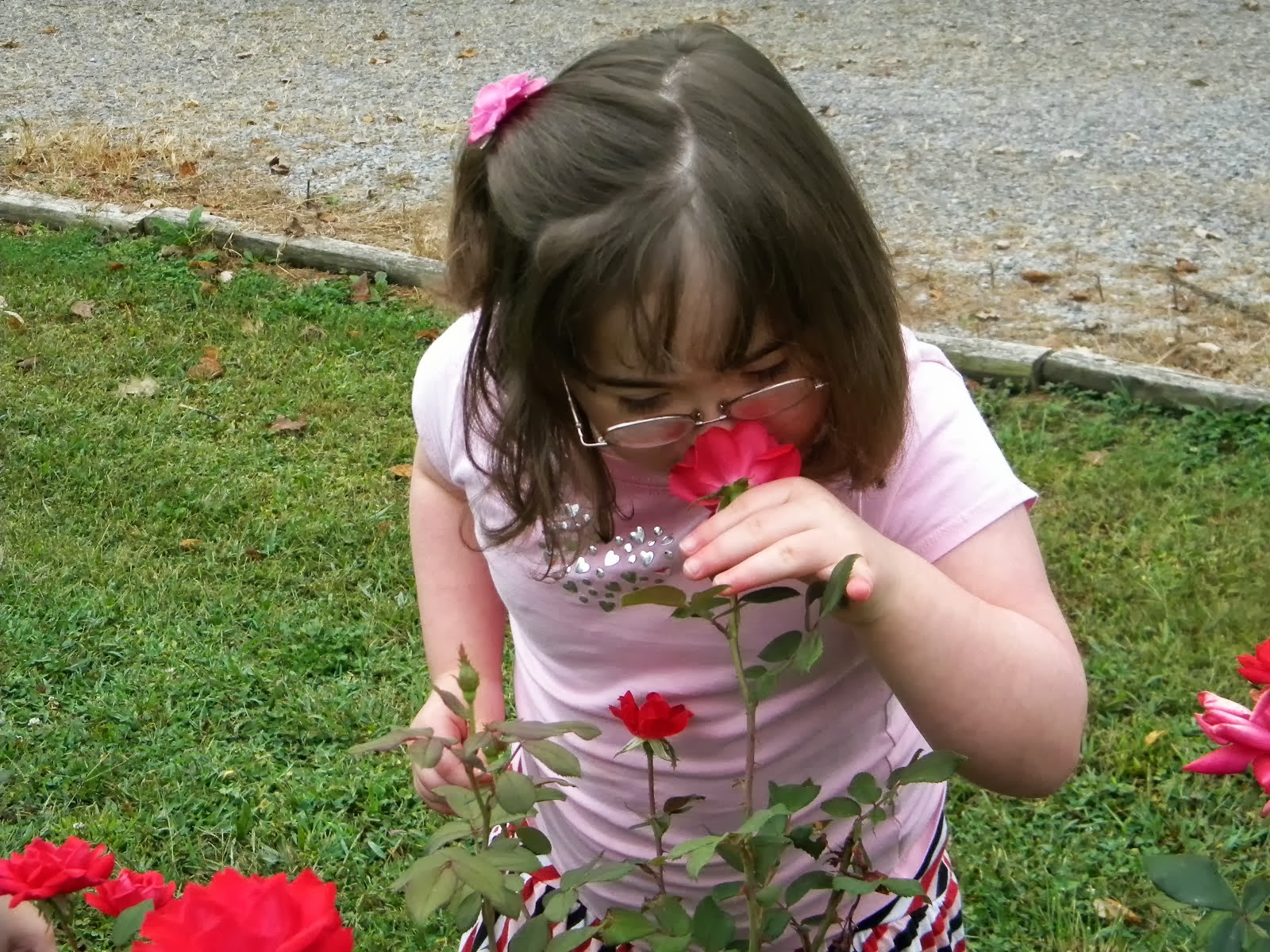
Tuesday, August 14, 2018

My Ironic Life

"Did your daughter get you interested in this profession?"

I've been asked this question a few times over the years when people discover I am a pediatric speech-language pathologist and mom to a child with Down syndrome and a severe speech and language delay.

"No," I tell all those who ask. "I worked as a speech-language pathologist (SLP) for two years in the school setting before I had my daughter. After she was born, I went into private practice focusing on kids birth to age 3 for more flexibility."

I get why people may think it was my daughter who inspired me to help other children like her. It would seem really ironic if it happened the other way around, but that is how it happened.

My first baby was born with Down syndrome and a heart defect. I was new at motherhood, and I had much to learn in general and especially with her diagnoses. When she was born, it was early on in my career, and I was refining my knowledge there too.

I have now been Jaycee's mother for 12 years and working as an SLP for 14 years. You may wonder what that has been like for me.

Honestly, extremely helpful and, at times, extremely difficult.

In one respect, my training and education has been beneficial. When Jaycee was gagging on solid foods and textures as a toddler, my feeding education was invaluable. I don't know how I would have survived those months without that knowledge. That was a stressful time for both of us, but she made progress and achieved a regular diet by age 3.

With my professional knowledge, I knew what to do to help my daughter's low muscle tone in respect to her tongue protrusion, drooling, and feeding. I purchased chewy tubes, massagers, and gathered up other supplies to exercise her lips, cheeks, and muscles in the face. I knew how to help her, but Jaycee often didn't want my help. I found it very frustrating. I successfully treated other children with these same tools and approach, but she refused to work with me. I should have left it alone, and I eventually did as I passed the items on to the speech-language pathologist who was getting paid to treat her.

As common with Down syndrome, her language was delayed, but I knew how to stimulate her language and what milestones were important. When Jaycee needed to learn sign language as a toddler, I already knew several signs and had experience teaching toddlers how to use sign language. That made it so much easier! I had confidence that I could help her, and she flourished in sign after age 2.

Achieving milestones was a long process for her like any child with a developmental disability. As a therapist, I knew the milestones too well. I couldn't shut that part of my brain off. I couldn't stop thinking about the next skill to develop. All the toys I purchased for her early on had a milestone in mind.

My professional brain just couldn't appreciate what Jaycee was doing as a toddler because I was too focused on what skill was next. My perspective on her during those first three years is something that I really wish I could go back and have a do-over. I wish I could have seen her through the eyes of a mother during that time and not a therapist. I certainly had trouble separating the two.

As her delays remained large in pre-school, I understood the reasoning and research behind the suggestion that Jaycee needed a speech generating communication device when the diagnosis of Childhood Apraxia of Speech (CAS) was given. The device didn't scare me. I had worked with them before, and I recognized how it could expand her vocabulary. I embraced her "talker" and helped program the device to say things that would help her communicate with us. There again, I was grateful for the confidence my experience gave me.
The Home Screen on Jaycee's Communication Device
When Jaycee started elementary school still barely speaking, I knew the odds of her developing clear verbal speech in full sentences was slim. It was a sad realization, but, at that point, I decided to encourage the total communication approach allowing her to use signs, words, and her device to communicate. I suppose some would say I gave up hope that she would really develop some functional speech. I had in a way, but it felt more like acceptance. It was the moment that I realized I had done all I could do, other SLPs had and were doing all they could do, but her Intellectual Disability, CAS, low muscle tone, and delays made verbal speech development difficult. I decided to embrace her abilities and be joyful for the communication she had. I completely shut off the therapy part of my brain when I looked at her. It was nice and long overdue. I never "worked" with my child again, not on speech-language goals anyway.

A few years ago, Jaycee started speaking more. It was a very exciting time to hear her say so many new words. While her speech is comprised of mostly vowel sounds, I am grateful for what she can say. She's worked so hard. She's come so far. We both have.

It's been a difficult balancing act- raising my child with a severe speech and language delay as a speech-language pathologist. It took me years to figure out how I could use my knowledge to help my daughter and support what other therapists were doing with her while not making her my own personal project. Some of the things I did in her life were beneficial and other things, I simply should have left to the SLPs treating her.

I think any mother wants what's best for their child, but it's often not clear how to make that happen. I was certainly confused at times as I navigated Jaycee's delays with my professional knowledge. Parenting requires continual learning and adjustments, and I eventually figured out how to parent my child-not do therapy with her.

Yes, I am a speech-language pathologist and the mother of a child with a severe speech and language delay. Life is full of ironies. This is one of them.

Life is also full of blessings and love. Our relationship is proof of that!


submit to reddit

Tuesday, August 7, 2018

If I Could Interview My Child's New Teacher

In a few weeks, my daughter with Down syndrome and minimal verbal skills will not be walking in to her old familiar classroom full of friends. Our little world is about to change. 
From kindergarten to fifth grade, Jaycee had the same teacher at the same school. Jaycee, the teacher, and I had a rhythm and understanding. We knew what to expect from each other. We had a good parent-student-teacher relationship, which made the six years of schooling easier. If I would not have liked the teacher, that would have been a loooong six years, but it wasn't like that at all.

This year, Jaycee will start a new program at a new school with a new teacher. Any parent in this situation would feel apprehensive. I'm no different. I know everything will be just fine after school gets started, but the unknown is always scary. Change is hard, especially if you have really enjoyed where you have been, but it's time to move forward.

I think any parent wants their child to have a caring and devoted teacher, but sometimes the person who teaches our child is completely out of our control. When there's no choice, information is key. Some parents in the regular education system take quite a bit of intel on their child's new teacher by peppering seasoned parents with questions, so they can be prepared and gauge how much success or trouble their child will have.

"How much homework does she give?"

"Is her classroom pretty strict or is it laid back?"

"Do children enjoy being in her classroom?"

"Is the teacher easy or too hard?"

The new teacher is important for any parent whether your child has a disability or not. Parents in the special education system ask similar questions trying to get a sense of what their child will face.


Unfortunately, I don't know too many parents at Jaycee's new school to contact and gather my normal intel. So, I feel like I'm heading into this school year with little information to go on. 

If I had five minutes to ask my child's new teacher anything (without any fear of seeming like a weirdo to a complete stranger), these are the things I would ask her or him:

-How many children will be in this class?

-Are there any students in the class who may harm my child? If so, what's the plan to keep her and the others safe?

-My child misses many school days due to illnesses, specialty appointments, and hospital admissions. What's your policy about making up work she misses?

-How often will you communicate with me about Jaycee's school days/activities because Jaycee cannot provide any of that information to me herself?

-Sometimes my child cannot go outside and play because the air may be too warm or cold for her lungs, how will this medical need be accommodated?

-My child uses signs, gestures, a communication device, and some verbal speech. How do you feel about a total communication approach? How comfortable are you with sign language or devices?

-My child is very routine and schedule oriented. If her transition to this new school is rough, what are some ways that you will support her? 

You might be surprised by things I would not ask the teacher. I really don't care how long they've been doing their job. I've seen great new teachers and wonderful experienced ones. The opposite can be true as well!

I wouldn't ask how much experience they have Down syndrome. My child is pretty unique, so it wouldn't really matter to me if Down syndrome was a new condition for them (though I doubt it is).

I really don't care what they do in their classroom for academics. I'm just not in that place in Jaycee's life anymore. Basic math and reading skills are important, and I'm sure they'll be addressed, but most of our daily life centers around her communication and medical needs.

For the record, I've never grilled a new teacher. I've always done it in my head, of course. Still, these are the things that are important to me. I hope the staff at the new school and I can get to the same place that I've been accustomed to with Jaycee's prior school experience. We'll soon find out....
submit to reddit

Tuesday, July 31, 2018

Devotions For Families with Special Needs or Medically Fragile

As I posted earlier in the summer, I have had some extra writing opportunities that are keeping me busy, and I wanted to share some of them today.

First up.... a devotional book:
Summer Devotions for Special-Needs Families is a book packed full of short devotions for families that have a child with a diagnosis. It was edited by Sandra Peoples and a number of Christian writers contributed to the book. Being on the Key Ministry Writing Team, I was blessed to be able to contribute a few devotions. If you are looking for something new to read, consider this book. Some of the topics are summer related but many are good to read any time. You can find this book on Amazon.


Next....a new piece: 
I recently had another post on the Key Ministry website called Reaching Out to Homebound Families. I, personally, have been homebound with my daughter for weeks or months due to her health issues. Being isolated at home can be very difficult, especially when you want to stay connected to a church. This post was written, so churches can help families in similar situation. Here's a snippet:

In a perfect world, all those in the faith could attend church every week as they desire. Life, however, presents all sorts of challenges making church attendance impossible or difficult for some families. There are some individuals who are homebound long-term due to a health condition and cannot attend church. Some families, like mine, have temporary homebound times which may occur after a child recovers from a surgery or serious illness, for example. Other families do not feel their child has a safe place in their church, because there is no one there equipped to handle their child’s needs or behaviors.

Whatever the reason, there are families who desire to attend church but cannot. Listening to sermons without attending church is relatively easy as many churches share them through podcasts, online videos, CDs, and social media. These outlets are great but hearing a message and feeling connected to a church are two different things. Interacting with people, having an opportunity for face-to-face prayer with someone, and receiving little words of encouragement are all missed by the family that is homebound.


submit to reddit

Tuesday, July 24, 2018

Things I Haven't Taught My Son

"Be careful, Jaycee," my son warns as she tries to unseat herself from a tire swing.

"Here, I'll hold it for you," he says as Jaycee takes one leg over the side of the swing figuring out her next move.

"You've almost got it," he encourages.

I have taught my son many things in his 9 years of life.
I taught him the alphabet and how to count to 10.
I taught him to appreciate the band Skillet, which he now plays on his electric guitar.
I taught him how to tie his shoes, hang up clothes, and mop a floor.

There are some things, however, that I haven't taught him.

Yes, I have explained Down syndrome to him in the most simplistic way. He's listened as I have shared with him why his sister cannot talk very well. When he questioned why she needs a wheelchair for long outings and he doesn't, I've had to provide those answers too. As things have come along, I've tried to teach him about his sister's needs and conditions. Still, there are some things I haven't told him to do or say regarding his sister.

There was a moment in 2015 when I marveled at Elijah's instinctive ability to help his sister communicate. He and Jaycee were on a large indoor playground apparatus. They were both at the top of it- winding around the tunnels when other children Elijah's age joined their area.

After some typical kid greetings, my son says, "She's my sister. Her name is Jaycee. She can't talk."

One of the little boys asked, "Why can't she talk?"

"I don't know. She just can't," he replied while I chuckled on the ground below.

I was proud that as a 5 year old, he had the unction to include his sister in this exchange. He handled it well, so I didn't involve myself in the conversation. Elijah continues to help his sister out in these situations. I have never given him a speech about including his sister or telling peers her name. He just did it on his own.

Last weekend as I watched Elijah stop and help his sister off that tire swing, I felt that marvel again. I haven't demanded that he always wait for his sister and help in every situation. Sure, there are times I ask him to show Jaycee which shoe goes on which foot, open juice box straws for her when she's struggling, or unbuckle her vest when her airway clearance cycle is done. But, I've never talked about the important of helping Jaycee in everyday life and paying attention to her needs. I've never insisted that he help her. He just has.

I suppose instead I showed him how to respond. The three of us spend a great deal of time together (dad works long hours), which he means he watches me help Jaycee, tend to her needs, and slow my pace to meet hers. I haven't necessarily taught Elijah these things, but he has surely picked up on them. I'm grateful that he's paid attention.

There are some things I don't have to teach my son.
I just wish the whole world could learn what he knows.
submit to reddit

Tuesday, July 17, 2018

Can I Be All Right When Things Are All Wrong?

Did you ever have one of those days? Or several days?

As summer break goes along, Jaycee has become a real home body. She likes the routine of home life. When we leave to go anywhere out of our daily norm, she is reluctant to get in or out of the vehicle. Fun stuff- let me tell you! Grocery shopping, haircuts, a cousin's baseball game, Bible school, etc. are all things recently that Jaycee has protested. She repeatedly signs "home" while driving to or from these tasks. I'm not sure what it going on with her, but it's been stressful for both of us. It's been building over the past few weeks for whatever the reason.

Last week, this became a major issue for us. Almost every outing, I had to plead my daughter to get in the vehicle to leave home. By Friday when she had routine appointments at the hospital and refused to go inside the building, I was ready to have a meltdown of my own. We made it through thankfully with the help from grandma's bribery. After seeing two specialists, our weekend was just beginning.

The next day, my husband was leaving his job site in another state pulling our camper home. I followed behind him in my van. We had a 6 hour drive ahead of us plus a few stops here and there. A couple of hours into the trip, a radiator hose blew on his truck. That ensued a call-a-thon to different parts stores desperately looking for a part that we later found out was only available through a dealership. I frantically drove to one store under the belief they had the right part. They didn't. But, they located it for us at a dealership 1.5 hours away (the direction we had just traveled from). The part was eventually in our possession and in no time was on the truck. But, hours were wasted, and we needed to find a hotel for the night to get Jaycee's medications done in time. Jaycee reminded me periodically that she wanted to go home. We all did! During the chaos of the breakdown, Jaycee was very confused and cried a few times, which made me feel helpless and more stressed.

By the time we settled in to the hotel in the pouring rain, I wanted to throw the blankets over my head and cry. That's what I did. The truck's breakdown, the disruption of my plans (I don't do well with spontaneous events), the rain, the little girl asking to go home every 30 minutes, the little girl refusing to get in and out of vehicles all week...I was tired. That's all I can say.

In retrospect, I am glad I was traveling behind my husband so that I could retrieve parts for him. Otherwise, he would have been in a gas station parking lot alone with no way to fix his truck. For that, we can be thankful. At the time, I was frustrated, upset, and stressed.

On the way home (we eventually got home with no problems the next day), I was pondering my reactions to the events from the weekend. I handled things really poorly. Well, I could have handled them worse. I didn't get angry. I just got very stressed. And that's when I had the thought:
Call I be all right if things go all wrong? 

Sometimes, I am awesome in adversity. I can remain calm and make decisions. I have displayed this during several of Jaycee's health emergencies as I pack for the hospital, put her oxygen on, and call a relative to watch my son. Other times, my mind gets wishy-washy, fearful, and busy. My mind gives me a million thoughts at once and most of them aren't helpful. I worry and stress about things I can't control. I have had this reaction in health emergencies too as I have paced around the house forgetting what I'm doing and taking twice as long to make decisions.

The crazy weekend was an example of me not being all right when things are going wrong. I had trouble sleeping. I worried. I talked negatively. I didn't have patience for Jaycee's refusals to get in the vehicle. I didn't have peace.

Hasn't God called me to something bigger? Can't I pull myself together?

I remember how I was 10 or 12 years ago. I would have never responded with crying and immense stress to a situation like this back then. After all, my faith helps me keep an eternal perspective on situations and reminds me that panic and worry will add nothing to my life. I'm still praying, reading my Bible, attending church, and listening to worship music like I was back then, but something's clearly off.

I think I have discovered the problem though. I haven't given myself what I need to make it through the days. The amount of time I spent with God was fine 10 years ago. But things are different now. I am a person who has seen their child go through multiple health emergencies, surgeries, and respiratory distress. I have adapted to our life with machines and medicines and behavioral issues related to my daughter's limited understanding and verbal skills. But, I start out each day with more issues than the average mother. It's a fact-not a plea for sympathy.

My life is more stressful than most. I can't pray, attend church, or read my Bible an average amount. I need more. I need more time with God filling me up, especially when I feel stress start. Instead, I want to believe that I am fine. I tell myself I'm handling things well enough. I try to manage, and sometimes I can messily make it through a spike of stress in our lives. Other times, I want to give up, which is certainly a sign I'm not fine at all.

This week, I'm reviewing my faith status, looking at ways I can live more peacefully, and striving to get to a place where I can be all right when things are all wrong. My husband is busy too looking for spare radiator hoses for future long drives. What about you? What's helping or hurting you?
submit to reddit

Tuesday, July 10, 2018

Independence Report

Independence in life is THE goal. Every parent eventually wants their child to be independent. In America, that usually means that the kids grow up, get a job or attend college, be self-sufficient, and move out of their parent's home.
Parents of children with disabilities are no different. We want our children to do the best that they can whatever that may be. We want them to be as self-sufficient as possible, but it's not always easy to achieve. Outsiders may believe that we, the parents, are partially to blame for a lack of independence. Some feel the parents may do too much for their child, don't push them enough, or are too overbearing. No parent is perfect, but there are true barriers to helping those with disabilities do everyday tasks.

For myself with Jaycee, there are many factors that become obstacles to her independence. Jaycee's minimal verbal skills is probably the biggest hurdle for us. She doesn't have the verbal skills for a 2 way conversation. She can't ask questions when she doesn't understand. That makes it difficult. If she doesn't respond to my directions, I'm not sure if she doesn't understand, if she doesn't want to, or just what the problem is because she can't tell me. Add an intellectual disability to that and you'll find that teaching a simple skill isn't so simple.

Besides that, Jaycee has low muscle tone common with Down syndrome. This makes some basic motor tasks hard for her to do, because her muscles aren't as strong. For instance, carrying objects up steps is hard for her (think about carrying a small grocery bag up a couple of steps). Her muscle tone gets worse after hospital stays for various amounts of time. After two hospital admissions in January, Jaycee couldn't walk up our stairs because she was so weak. She crawled up them using her hands and knees for a few weeks until her strength improved. Her frequent illnesses disrupt many things in her life, but they definitely affect her muscle tone, endurance, and strength. This impacts her ability to make progress in her independence because she's fighting to get back what she had to begin with.

Another barrier has been Jaycee's fine motor skills. Many simple tasks require small muscle movements in the hands and fingers. Fine motor has always been challenging for Jaycee. Opening a water bottle, taking the cap off of toothpaste, opening a shampoo bottle, and tying your shoes are all examples of common daily tasks that require fine motor abilities. Good fine motor skills are vital to being independent.

Even though there's some challenges, Jaycee can do many things. When Jaycee was younger, I wanted to know what to expect in the future. I searched and read to try to find answers that only time could reveal. I'm less concerned about what our future holds now, because it's really not a worry for me anymore. Still, I'd like to offer information for the parent out there searching and wondering what life will be like. 

Every child with Down syndrome is different. Every child has strengths, weaknesses, and are motivated to do different things. No two people with Down syndrome will have the same abilities or challenges. But, here are things my 12 year old can do:

-Write her name. It's not perfect, but she tries.
-Take selfies.
-Call people on FaceTime. (Usually when she's not suppose too. Ha!)
-Brush her own teeth doing every step by herself. I do an extra minute of brushing just to be sure.
-Once I turn the water on, Jaycee can do almost everything in the shower herself. Shampooing her hair is still a bit of a challenge.
-Dish out her own food on her plate. She likes to give herself generous portions.
-Put her plate in the dishwasher after meals.
-Set the table for meals.
-She's just started opening up her own water bottles for drinks.
-Put dirty clothes in the hamper.
-Put her clothes away in the dresser or on hangers in her closet.
-Put her shoes on by herself, but they may be on the wrong feet. She can't yet tie shoes.
-She likes to pick out her own clothes. She doesn't always understand to choose them based on the weather, but she does pretty good for the most part.
-Gather what she needs for school in the morning.
-Feed the fish on her own. Feed the cat with a little help opening the can.
-Swiffer mop the floor.
-She loves to unload groceries from a shopping cart into the van. She helps carry grocery sacks inside the house too. A couple of times, she started bagging groceries at the store and did pretty good. Sometimes, she surprises me.

Is Jaycee behind? Yes, of course. But, she has accomplished many skills considering that she is minimally verbal, has a significant Intellectual Disability, and has major gross and fine motor deficits. Yet, there are many things she can do. Not only that, she keeps learning and doing more. Next year, I'm sure the list will be longer. I'm proud of what she's accomplished. As far as the things that are still a struggle- we'll get there. If not, we'll manage. We always have.

I only share this information for parents who are curious. What she does is important to many teachers, professionals, and the world. Who she is and becomes is by far more important!
submit to reddit

Tuesday, July 3, 2018

Sleep Apnea Surgery: 1 Year Later

Last year, my daughter had a multi-level surgery to help treat her obstructive sleep apnea (OSA). This wasn't a surgery we ever thought we'd consider, but it was one that came after 8 years of struggling.

When my daughter was 3 years old, a sleep study indicated Jaycee had OSA. It is a diagnosis that is quite common for individuals with Down syndrome. The first line of treatment was to remove her huge tonsils and enlarged adenoids. I thought that the OSA would be "fixed" after the surgery. To my surprise, the follow-up sleep study showed the OSA was still present. The c-pap entered our home shortly after the study. Getting Jaycee to tolerate the c-pap machine was a long, arduous task that frankly took years.

Since her diagnosis, Jaycee has had sleep studies completed every 1-2 years. Nearly every study showed worsening apnea, which meant her c-pap support was increased more and more. Eventually, Jaycee switched to a bi-pap to make the higher pressures more comfortable for her. It worked for awhile, but the pressures kept getting higher making the bi-pap uncomfortable. If you are familiar with pressure settings, then you'll know that 19/15 with a rate of 15 is pretty high (and hard to tolerate). When she was no longer wanting to wear her bi-pap on this high rate, we started considering alternatives that we had been offered before but never considered.

I'm trying to sum up 8 years of Jaycee's OSA and machine treatments in two paragraphs. There's so much to say. If you want to read more on her background, I've written previously about her journey towards the surgery on this post.

After seeking several opinions and going through several diagnostic tests, my husband and I consented to a multi-level surgery performed by an ENT last year. A sleep endoscopy test showed exactly where Jaycee was obstructing while she was sleeping. This test allowed her team of doctors to develop a surgical plan for treatment. This website gives some information on the surgery in general. Basically, Jaycee had a total of 5 spots in her nose, throat, and mouth that would be operated on in order to create more room in her airway.

Prior to the surgery, we were told what to expect with her recovery and the risks. After surgery, they thought Jaycee would need a night or two in the hospital to be monitored. After that, Jaycee would need around 10 more days of recovery time at home. Her diet would need to be softened (much like after a tonsillectomy) during her recovery. Also like a tonsillectomy, the main risk was the small chance of a bleed post-surgery.

The benefits of the surgery would hopefully be that Jaycee's pressures could be decreased significantly. The surgeon reported that this surgery eliminated the need for a c-pap or bi-pap machine for some patients but didn't expect that result for Jaycee given her severity.

Roughly one year ago, Jaycee went in for surgery. At the time of the surgery, Jaycee was 11 years old and minimally verbal. My husband and I were nervous, but hopeful she would do well. But, the recovery was worse than I could have imagined. My body tenses up again just thinking about it. She was in a tremendous amount of pain. Jaycee has a high tolerance for pain, so I knew she must have felt horrible. But really, the doctor didn't prepared me for the pain. I suppose I should have known, but it was hard to watch her feel so bad.

Jaycee spent the first night after surgery in the ICU as planned. Then she spent the next couple of nights on the hospital recovery floor. The main issue after surgery was her pain that kept her from being able to/wanting to swallow. At first, she couldn't manage swallowing her own saliva. It took her some time to swallow enough liquids to go home safely. We eventually got there! I could write several paragraphs on how the nurses didn't seem to know how to handle Jaycee and her recovery but I'll stop myself. (Sigh)

Once we were home, Jaycee wasn't doing great. She was barely taking enough liquids and soft foods. Normally, Jaycee wants to eat and drink all day long. She had to almost be forced to eat yogurt or drink a Kool-Aid jammer. Jaycee sat around and looked pretty miserable most of the time.

Then another problem happened. Shortly after being home, Jaycee developed thrush, which was most likely a side effect of one of her post surgical medications and her decreased oral intake. Thrush made eating and drinking even more painful for her. We begged her to drink and take her medicines. It was extremely stressful! I had a plan in my head of how her recovery would go based upon her doctor's warnings, and the reality was much different.

Then, Jaycee had a post surgical bleed. And then another. That's right- two. She had to be admitted each time for the bleeds. I could write 500 words describing the bleeds, but I'll spare you. In total, it took 25 days for Jaycee to make a full recovery. Up until that point, she needed some type of pain medication each day or needed to be encouraged to eat or drink. Twenty five days is a long time when you are trying to give medications and drinks to a patient that is unwilling! After all her bleeds and complications, we were slow to let her eat foods with rough edges and allow her a full diet. We finally let her eat almost anything about day 35-40. (Jagged chips were offered later than that.)

Some thoughts for those considering a multi-level surgery:
1. Plan on more recovery time than the doctor suggests!
2. If you wear a bi-pap, make sure your team has a plan in place for safe sleeping post surgery. For Jaycee, her airways were swollen and sore as expected right afterwords. No one wanted her to wear her bi-pap right after surgery. However, she was dropping her oxygen saturation levels at night in the hospital. There didn't seem to be any thought about what we would do during this post-surgical time. When the concern came up in the hospital, members of the team had differences of opinion. We ended up using oxygen, which we had at home anyway, while she slept at night for several weeks.
3. Consider having a humidifier ready for after surgery, especially if using oxygen. We purchased a good humidifier after Jaycee's first bleed. We were doing frequent saline sprays to keep her nasal passages moistened, but we decided to use a humidifier too for another layer of comfort.
4. Be prepared. Have soft foods, lots of liquid options, and over the counter pain medications at home for discharge. We tried to avoid foods and drinks that were red, which was the hospital's suggestion so that we wouldn't mistake red food or drinks for blood in the event of a bleed. Although, Jaycee's bleeds were so significant that it wasn't questionable.

A year later, here's what we have noticed with Jaycee:
-We were told that we'd see the full effect of surgery on a sleep study within 6 months. Jaycee, because of her nighttime sleeping issues and inability to use her high pressure settings after surgery, had a sleep study completed 6 weeks after the surgery. It wasn't completed at the optimal time, but it was necessary for her situation. Even in that short amount of time, Jaycee's pressure was decreased to 15/11 and the rate was dropped. We were pleased with those results. Because Jaycee has been tolerating this setting, her team has decided to not repeat a costly sleep study yet.

-She can burp now. The surgeon thinks we are crazy and insists this surgery has nothing to do with burping, but something changed. Jaycee never burped prior to the surgery. We had never really thought about it before, but it was obvious after the surgery. Once she was recovered, Jaycee would burp and cover her mouth in surprise. She thought it was so funny and odd. A year later, she is still surprised by burps. Apparently, no one can explain this burping phenomenon but we insist it happened because of the surgery.

-Jaycee can literally cough out mucus. Jaycee never coughed up mucus prior to the surgery. She's sick with respiratory infections often, so this was a big change we noticed shortly after surgery. She would cough the mucus up and not know what to do because it had never happened before. It was another change in her body that she was surprised by. This, the surgeon agreed, is something that could have been changed by her surgery.

In all, I can look back at the surgery now and be thankful that we did it for the positive changes Jaycee has experienced. However, I was really regretting our decision while we were in the middle of her extreme pain, bleeds, and inability to drink. Last summer was quite brutal, and I was sorry that Jaycee felt bad for the majority of her summer break. But, I am glad today that the surgery is behind her, and it was beneficial.
submit to reddit